


It is said in that Jing is inherited from your parents at the moment of conception. It is a concentrated life force essence responsible for growth, development, reproduction and the ability to withstand stress. This essence dictates your constitution. It carries you through childhood and into your early-adult years. Jing is associated with vitality, longevity and resilience.
Jing is said to begin its decline around midlife. Evidence of this decline can be anything from greying hair and balding to hot flushes to forgetfulness to increased aches and pains and susceptibility to cold and flu. That sounds familiar. I’ve had a life-long game going with Jing. Sometimes the ball’s in my court and sometimes Jing has the ball. But it really became evident that the ball was no longer in my court when menopause arrived.
What’s interesting to me (I’ll take a short detour here) is this consideration: Did low Jing stores lead to early (and challenging) menopause? We tend to think of menopause as “hitting us” at midlife, but can we better prepare for midlife by shoring up the Jing earlier? And, is this why some folks have a particularly challenging midlife transition (whether menopause or andropause) while others move thorough this transition with greater ease?
TCM is thousands of years old and is the traditional medical system of China. It is based upon the concept of Qi (vital energy that flows within and around us, particularly the energy channels of the body that connect the organs and tissues). The aim of TCM is, like many health systems, to restore balance.1 We can look to the wisdom of this ancient system to guide us in our modern lives. TCM states that when Jing is abundant, vitality is too. If vitality is lacking, it is safe to suggest: Jing needs help.
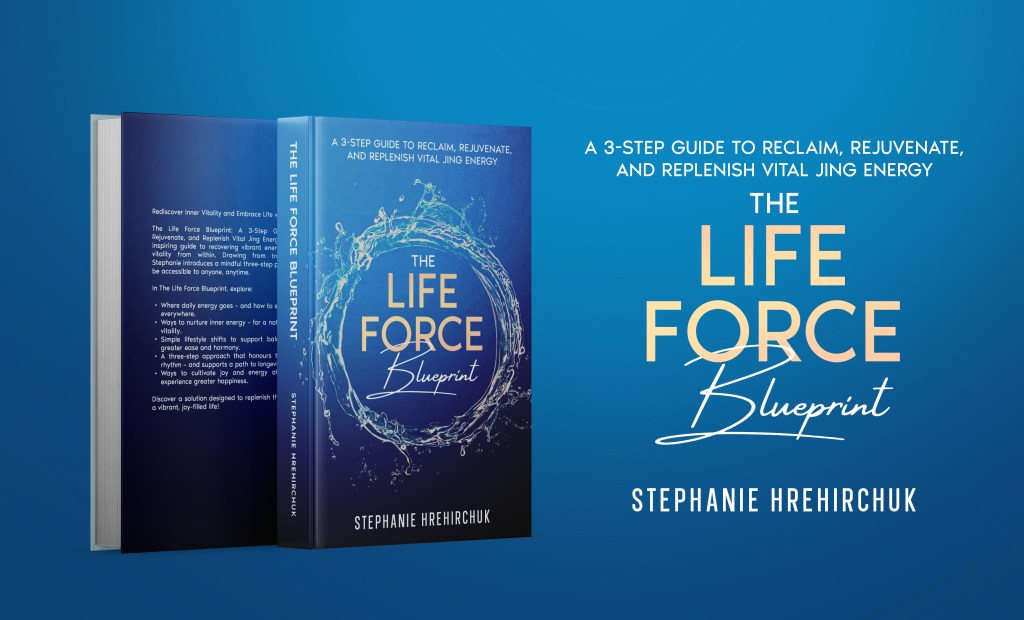
~ Excerpted from the book The Life Force Blueprint: 3 Steps to Reclaim, Rejuvenate & Replenish Vital Jing Energy
Pick up your copy today and start your journey to replenish the Jing!
1 Mount Sinai/ Traditional Chinese Medicine/ https://www.mountsinai.org/health-library/treatment/traditional-chinese-medicine
 The LIFE FORCE Blueprint
Leave a comment